Overview
🦀 Kep Crab Market

🦀

Kep Crab Market

·

ផ្សារក្ដាមក្រុងកែប · 白马螃蟹市场

🕒 Opening hours: ≈ 05:00–17:30
🆓 Entry: Free
📞 Phone: +855 10 833 168

About Kep Crab Market

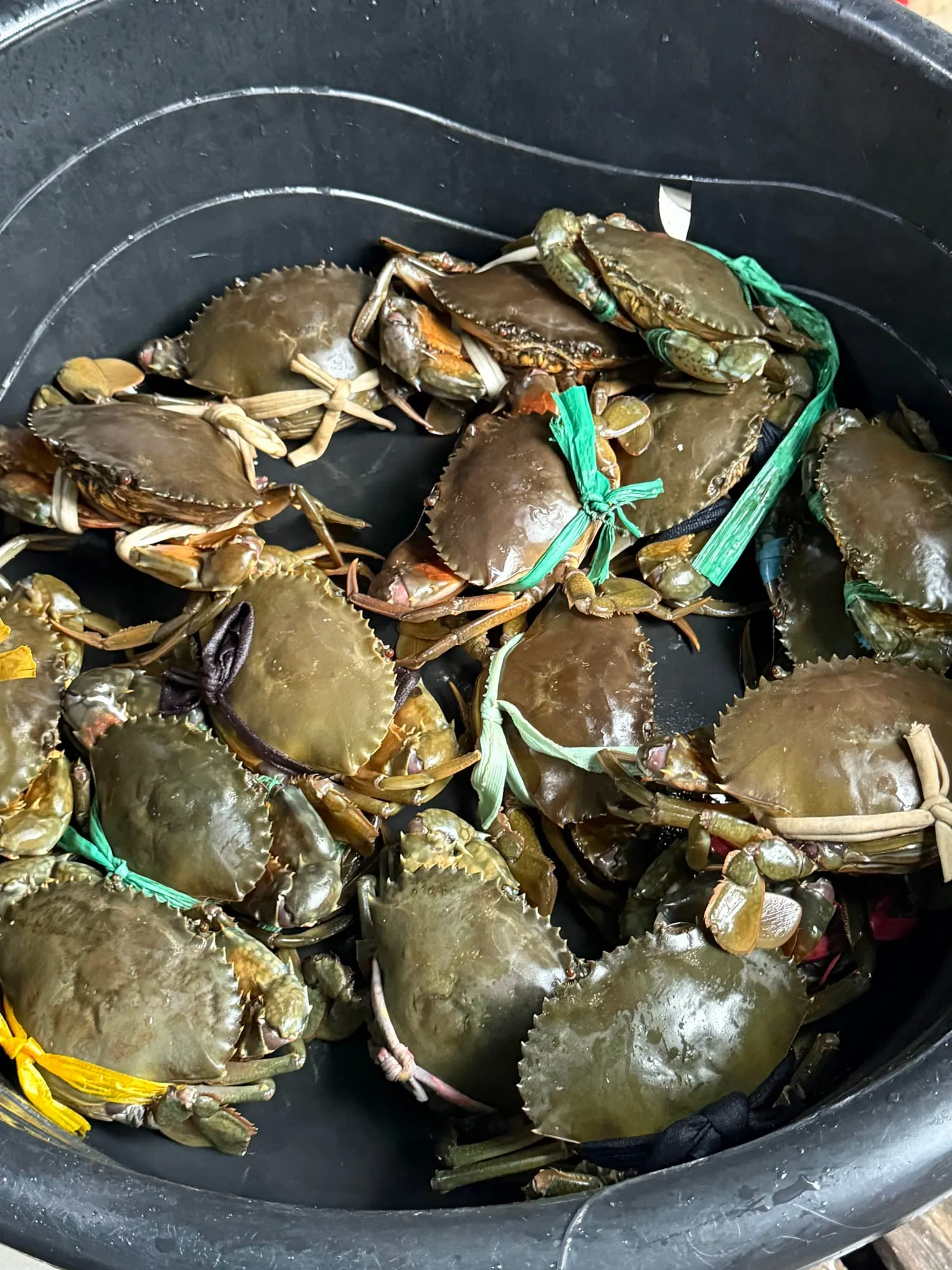
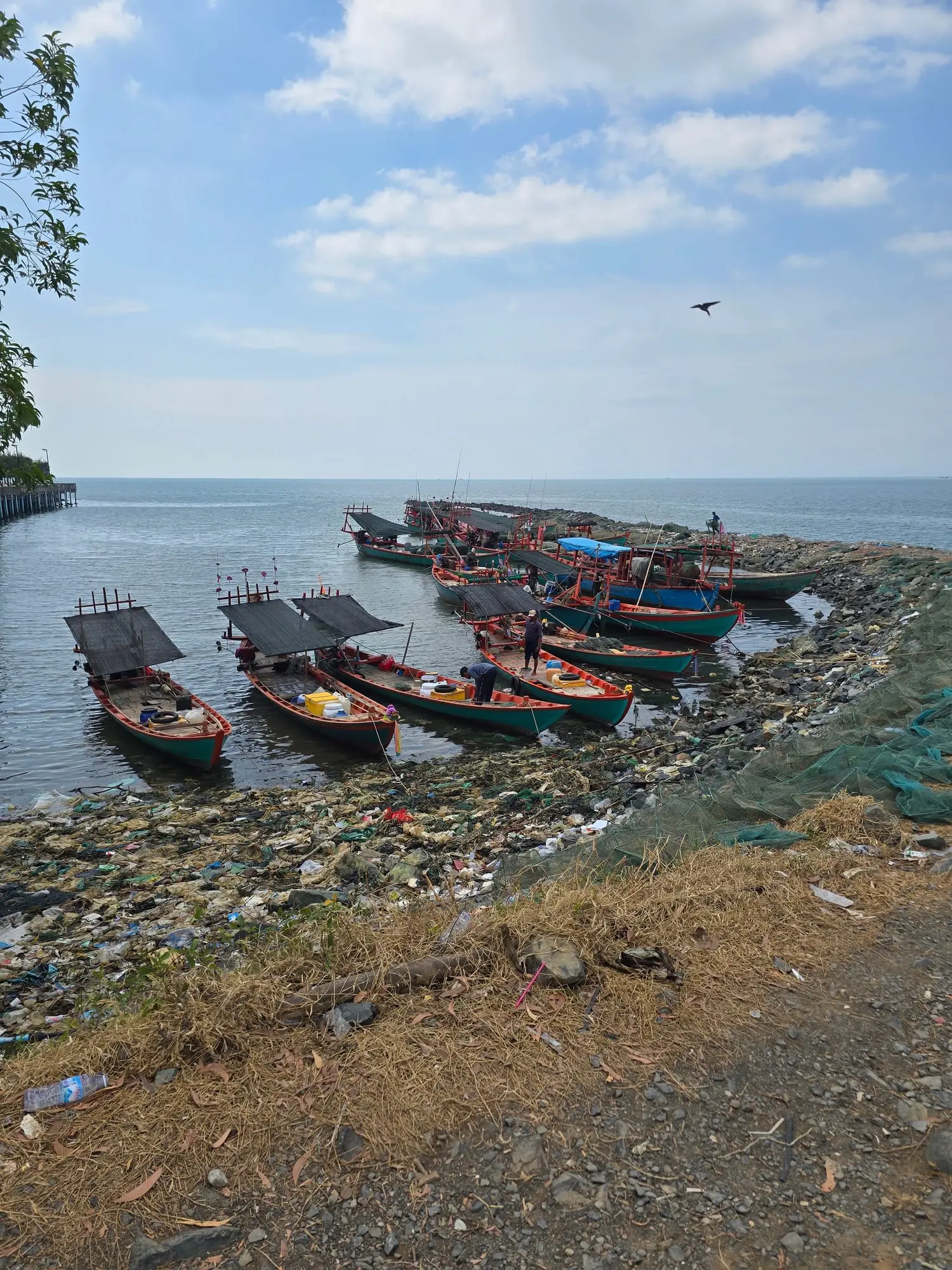
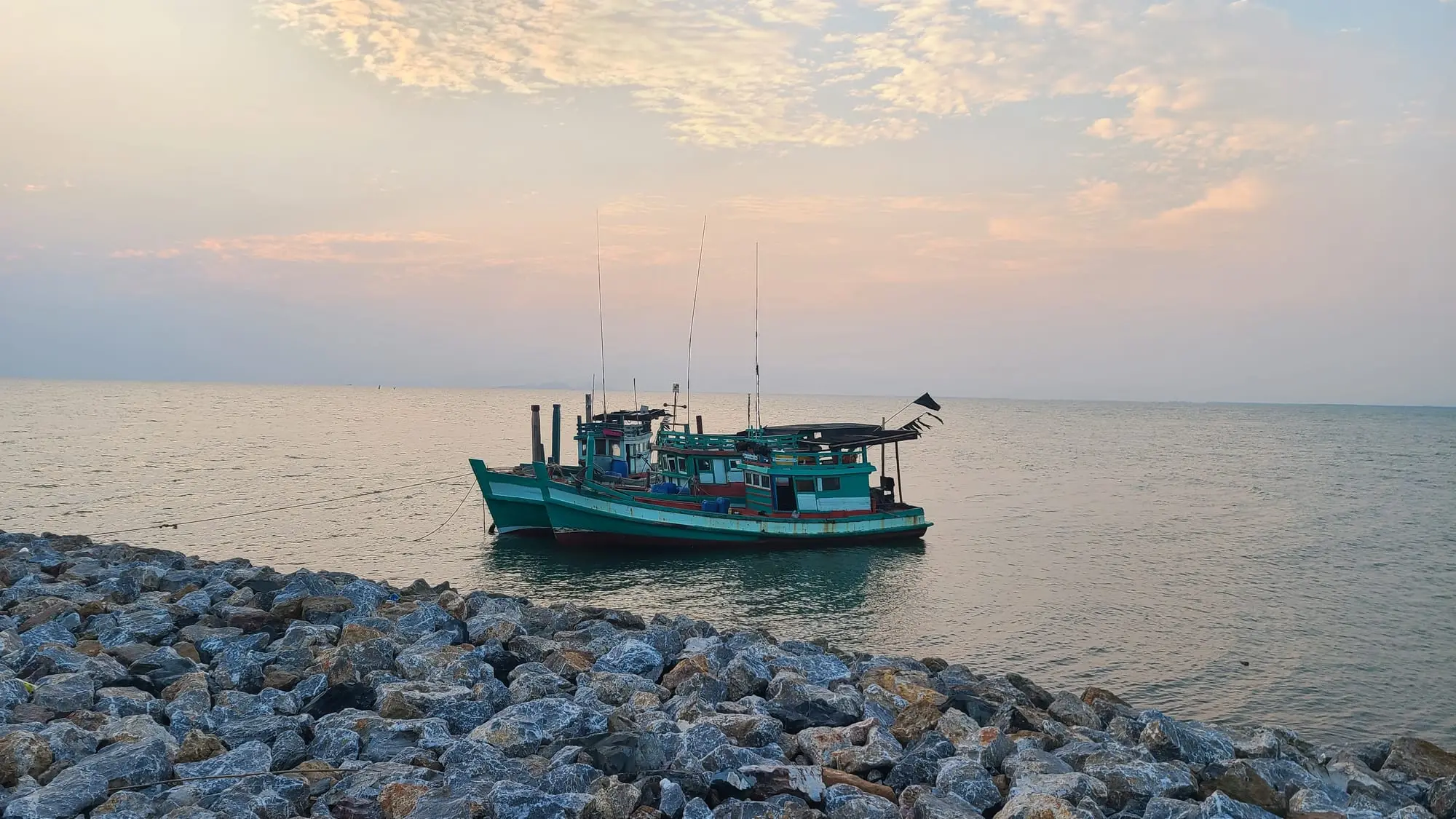
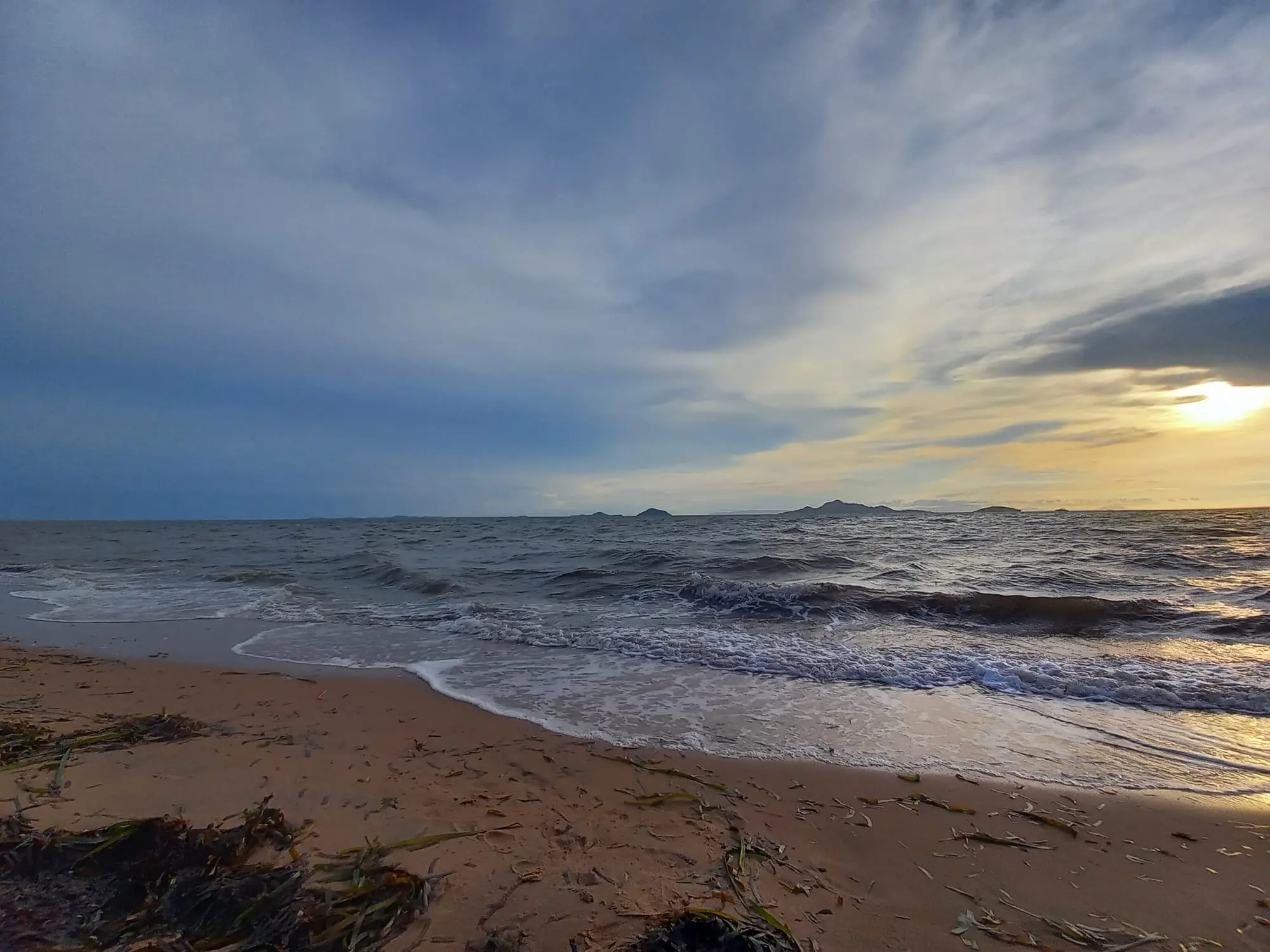
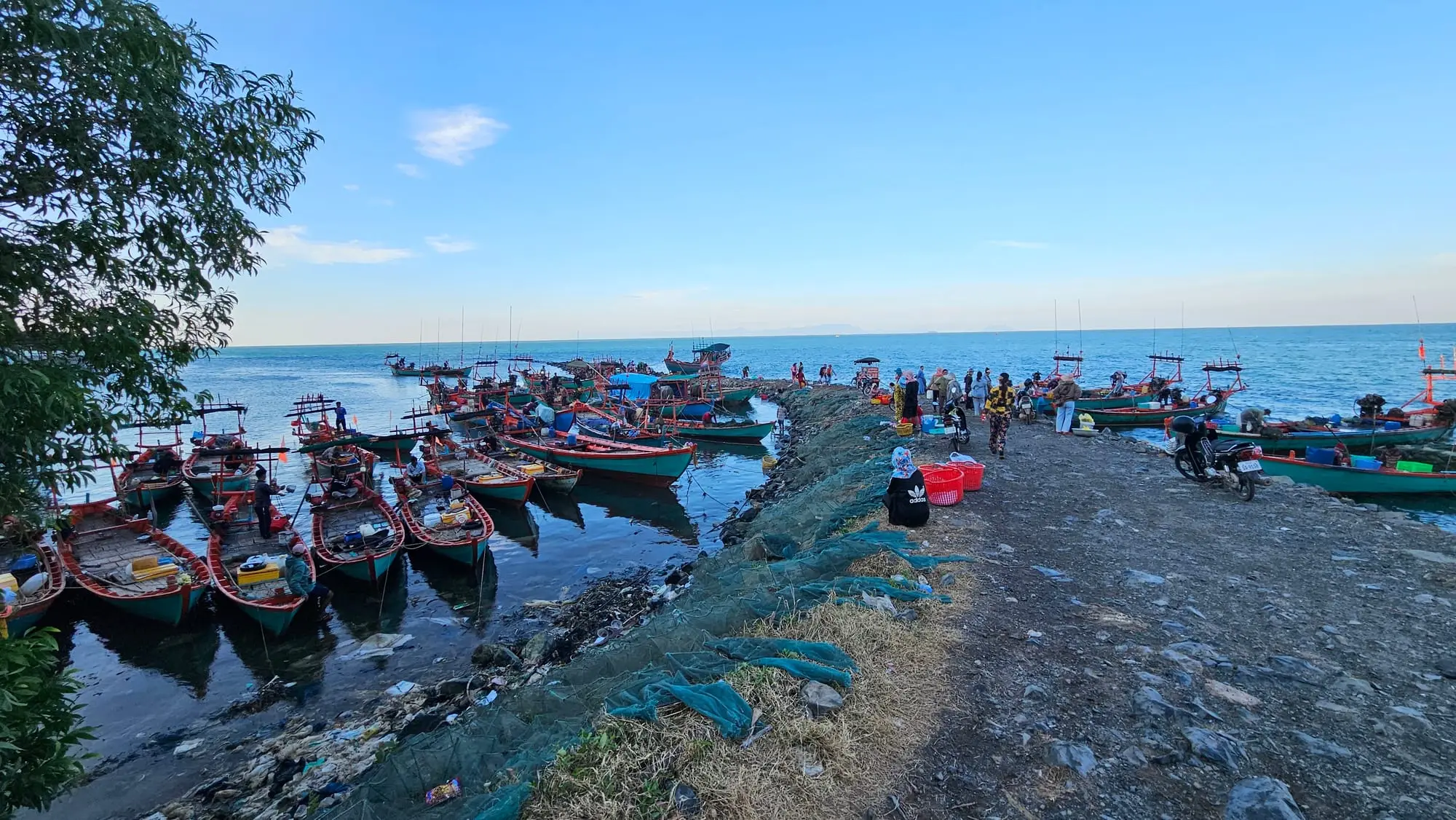
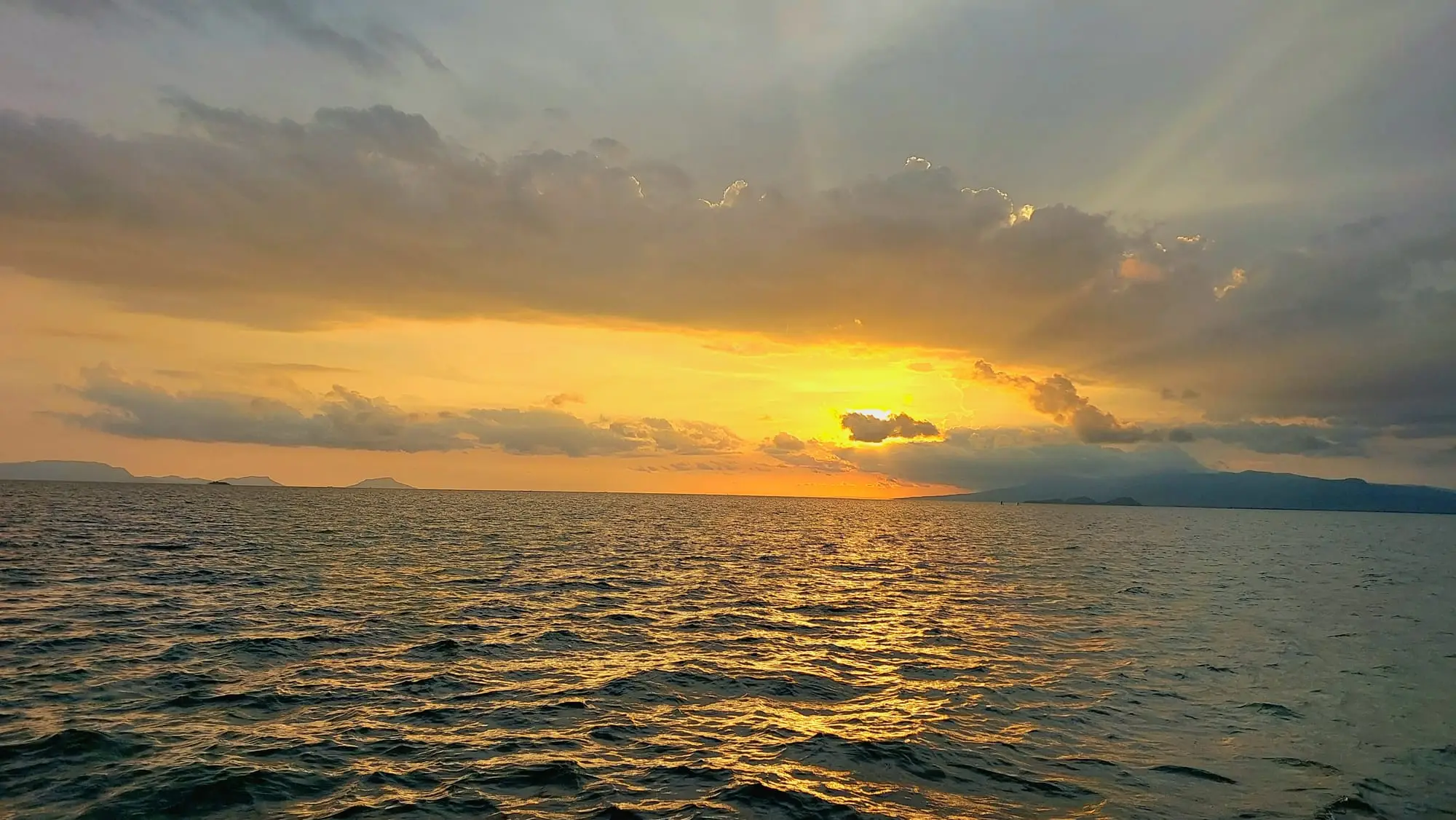
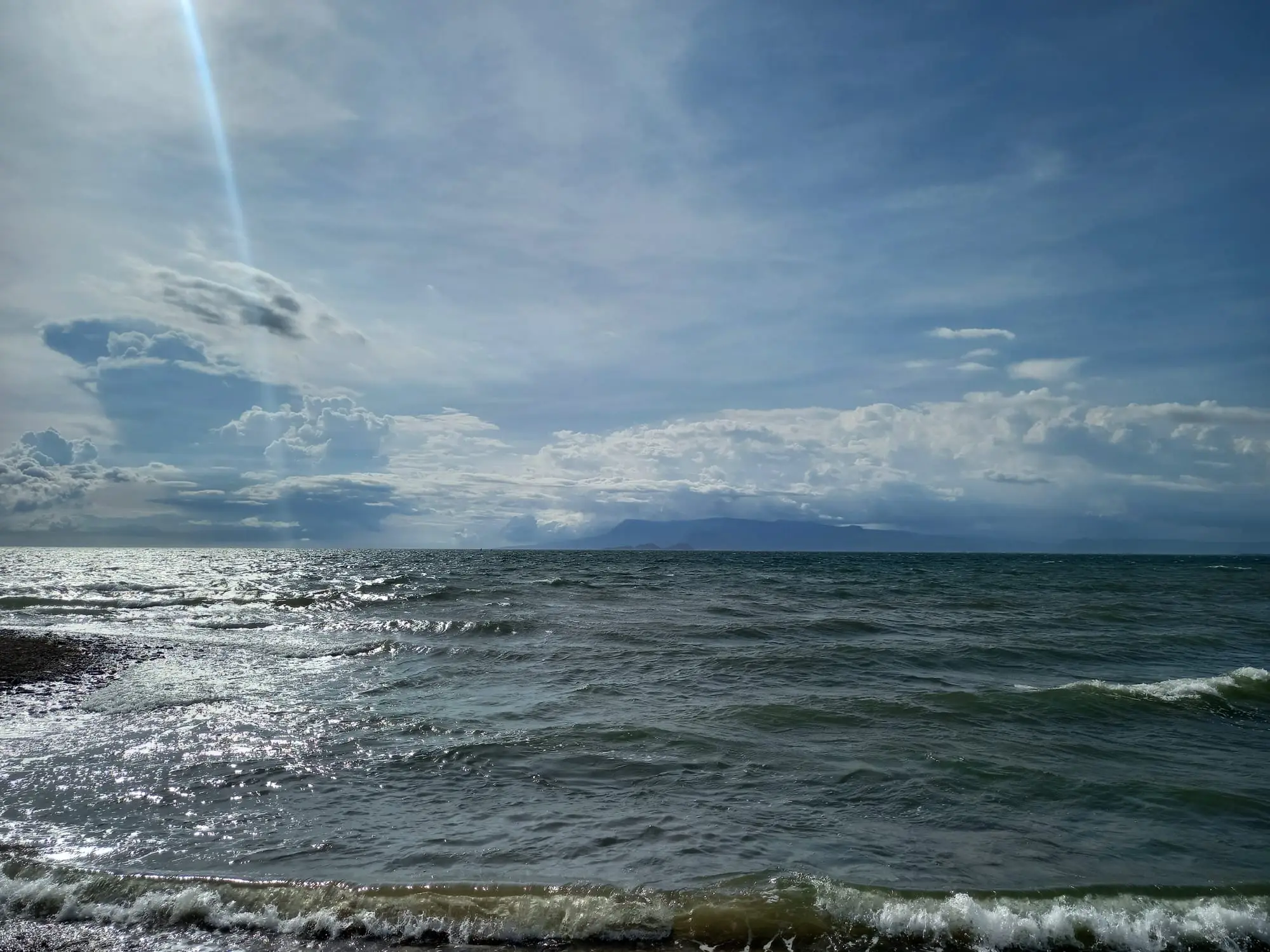
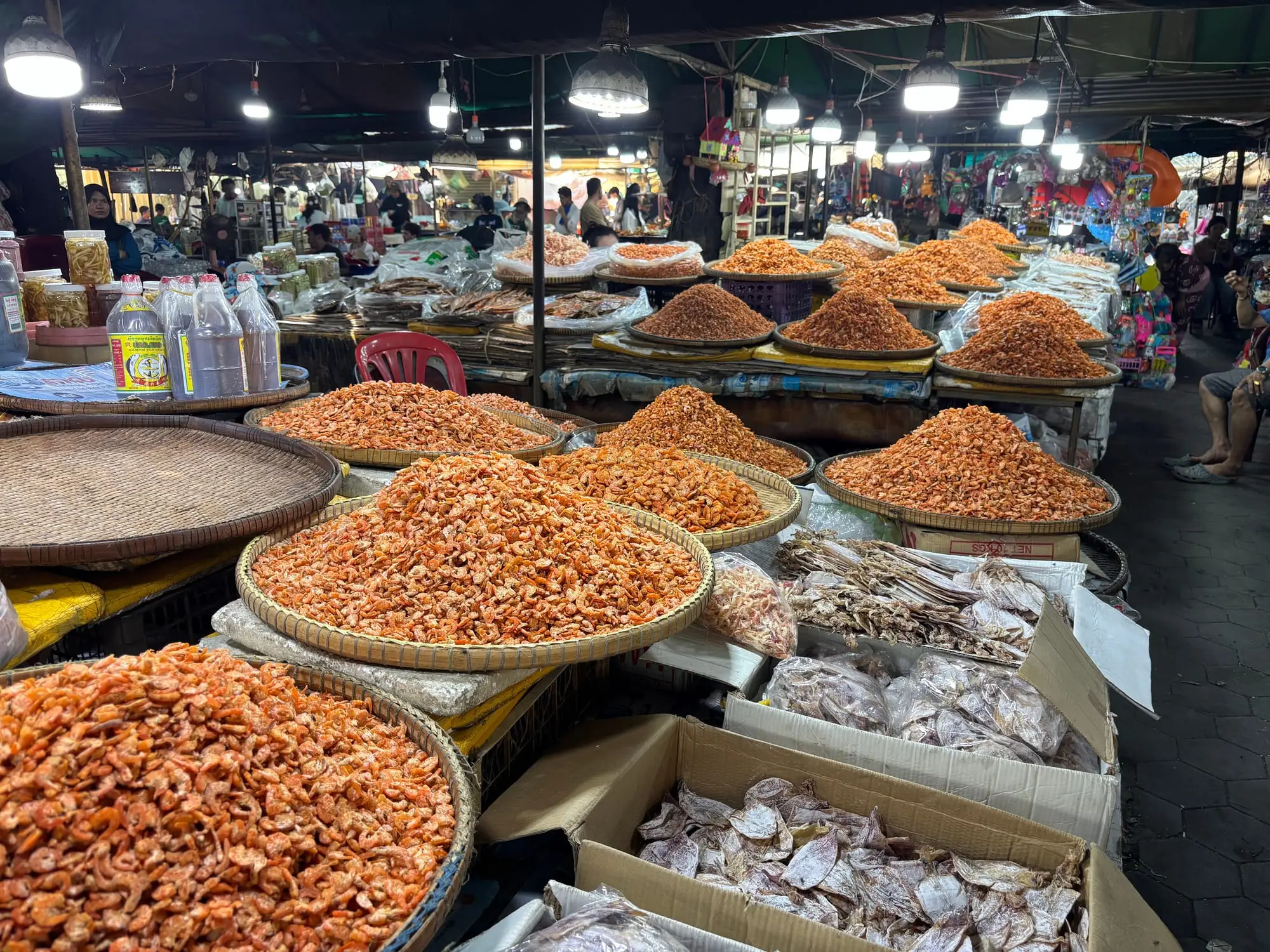
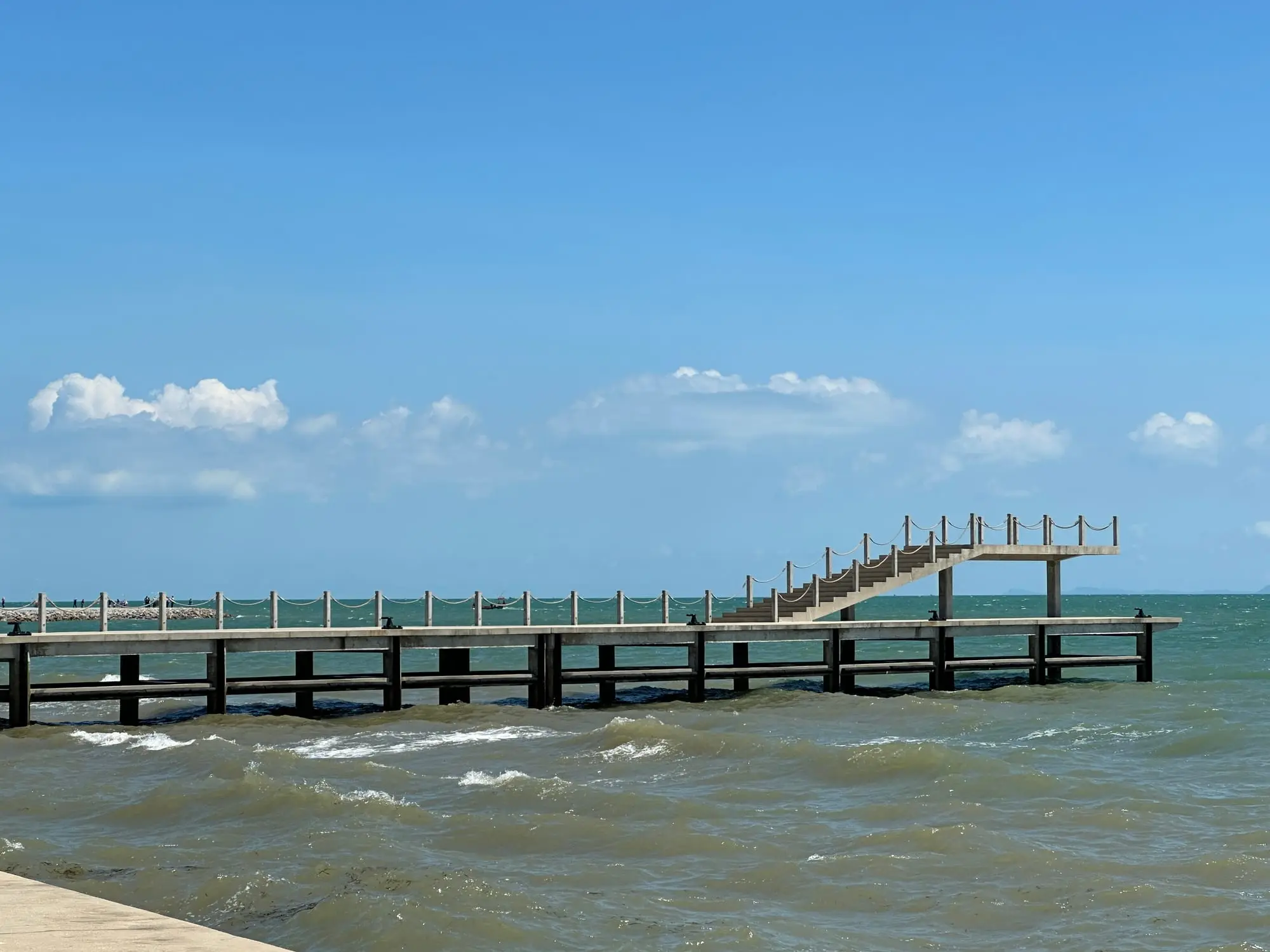
Kep Crab Market (ផ្សារក្ដាមក្រុងកែប) is the best-known landmark of Kep, a small coastal province in southern Cambodia. It sits on the Gulf of Thailand, where fishing boats land their catch and vendors sell crab, fish, and shellfish straight from the water.

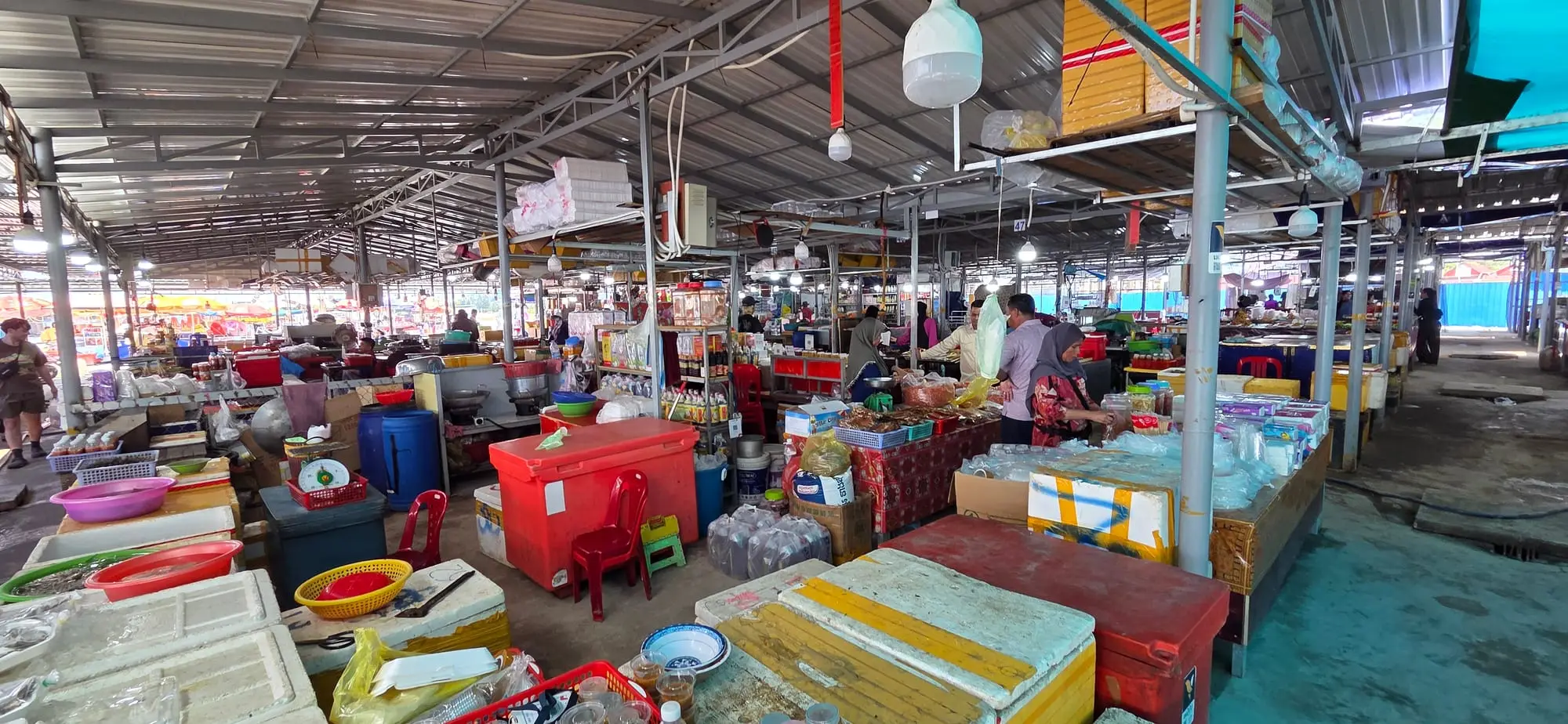
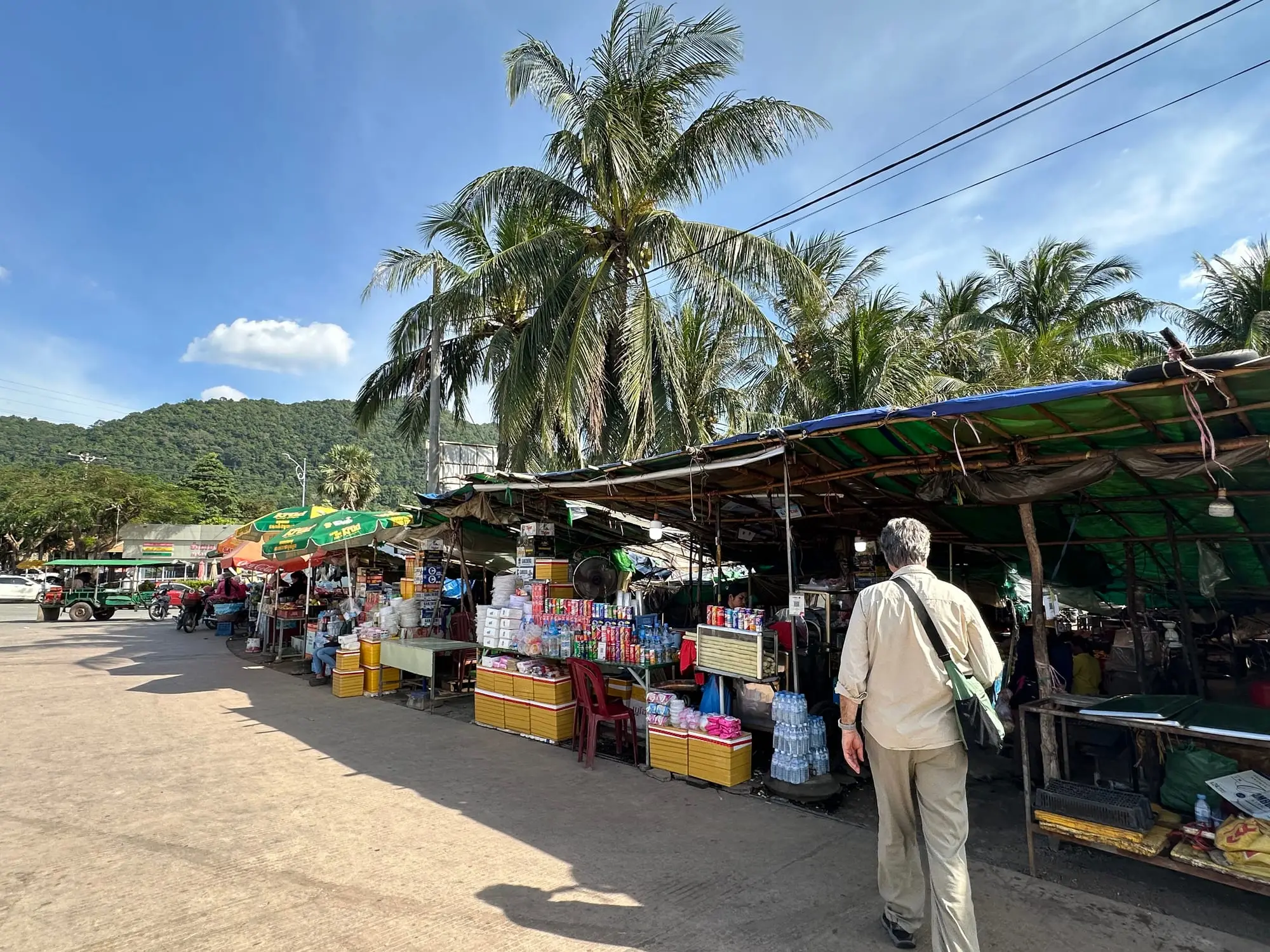
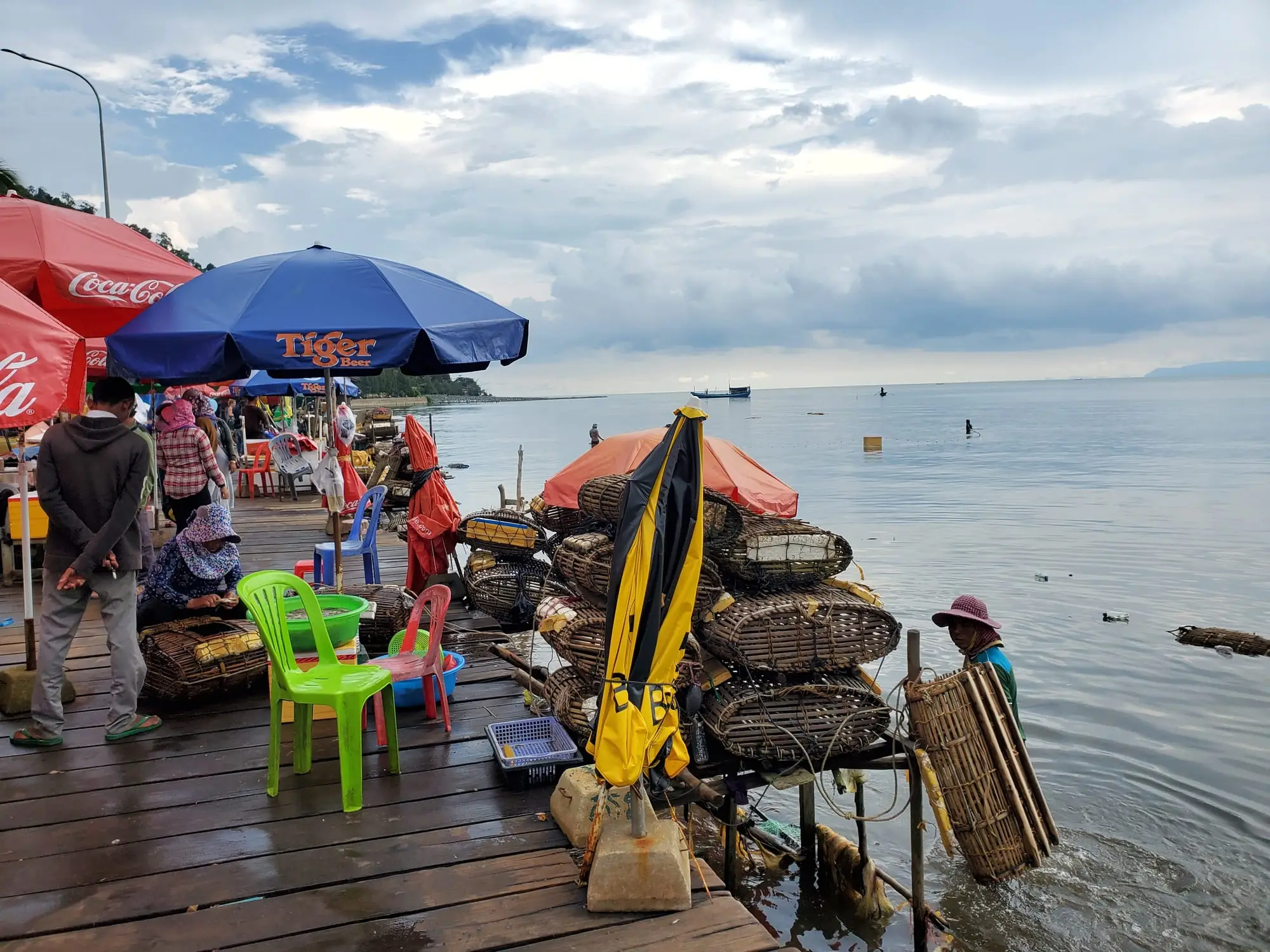
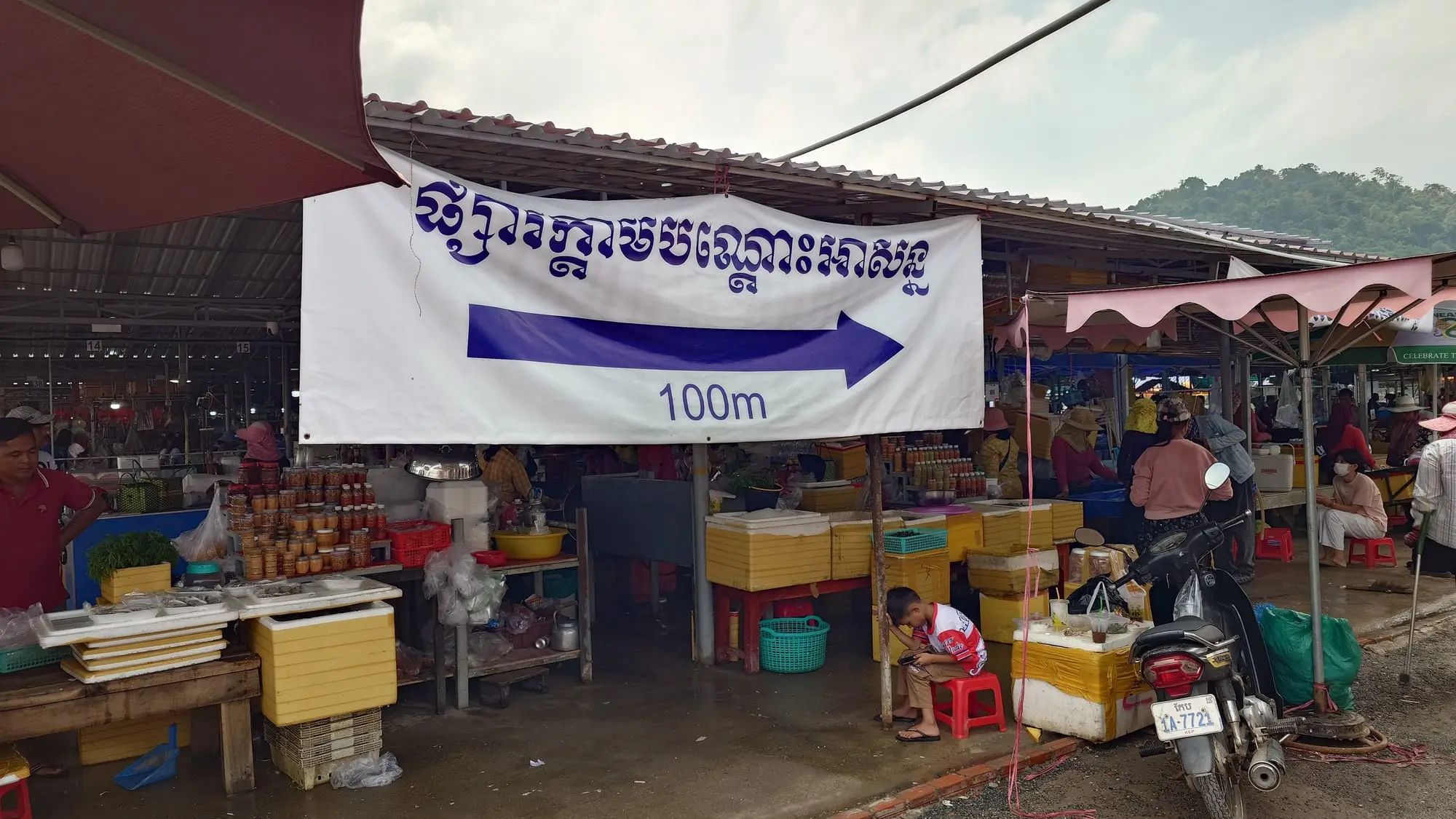
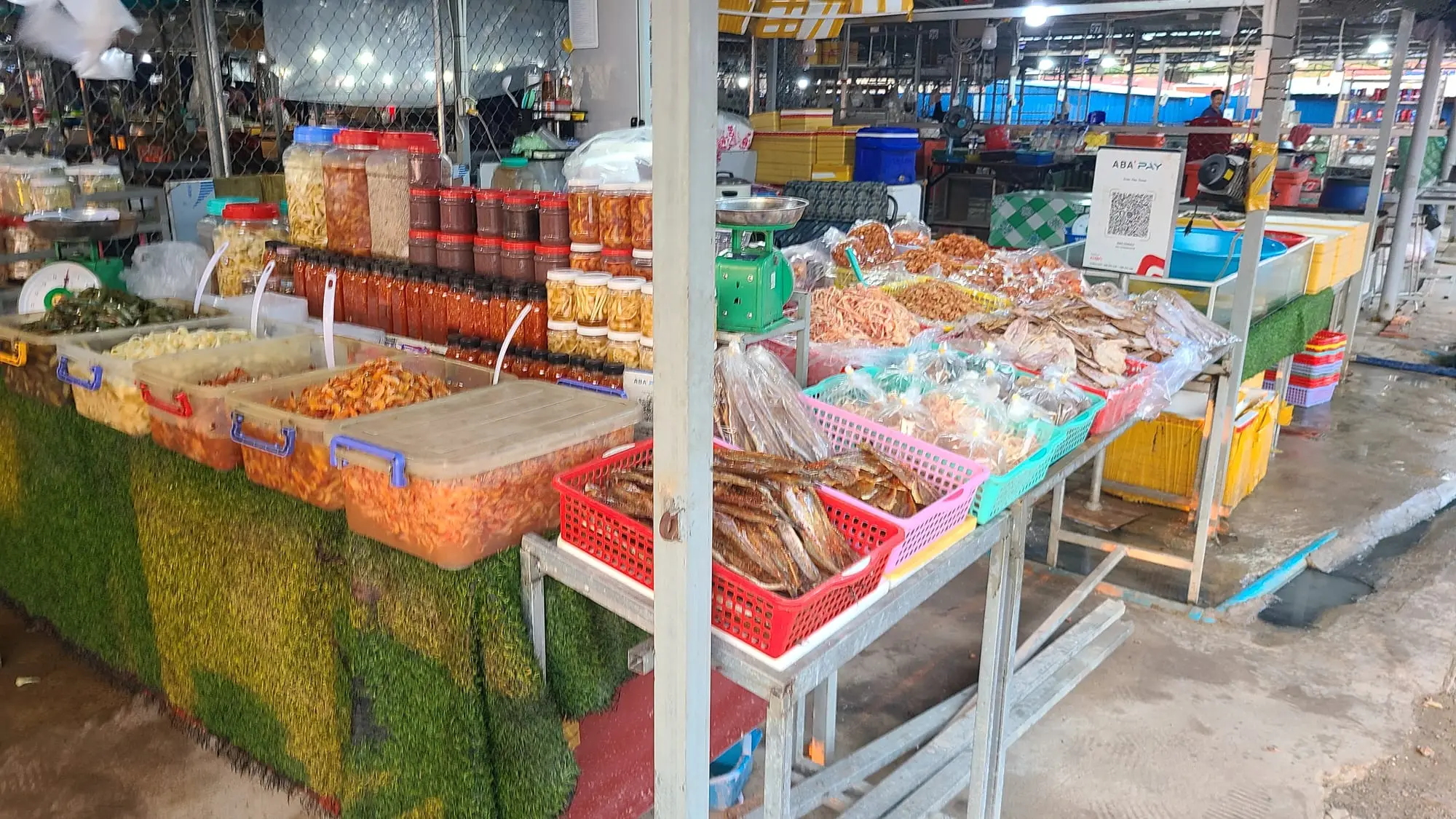
The market is simple and working-class rather than polished. Wooden and tin stalls line the shore; ice boxes hold the day's crab; and just behind the stalls, the giant red 'Crab King' monument has become the town's symbol.

This guide is independent and non-commercial. We describe the place, its history, and its practical details so you can visit with realistic expectations — without promoting any single vendor or business.

History & Background

Kep's story is tied to Cambodia's coast — from a French-era seaside retreat to a quiet fishing town rebuilt around its crab market.

Early 1900s

A French-era seaside retreat

Under the French Protectorate, Kep (then promoted as 'Kep-sur-Mer') was developed as a coastal resort for French administrators and Cambodian elites. King Sisowath and later King Norodom Sihanouk kept villas here, and the hills above the bay filled with summer residences.

Mid-20th century

Cambodia's fashionable coast

In the decades before the war, Kep was one of the country's most stylish beach destinations. Alongside the resorts, local fishing grew, and crab and seafood from the bay became part of daily coastal life.

1970s

War and decline

The civil conflict and the Khmer Rouge period brought heavy damage to Kep. Many villas were abandoned or destroyed, and the town's role as a resort faded for years.

Late 1990s

The Crab Monument

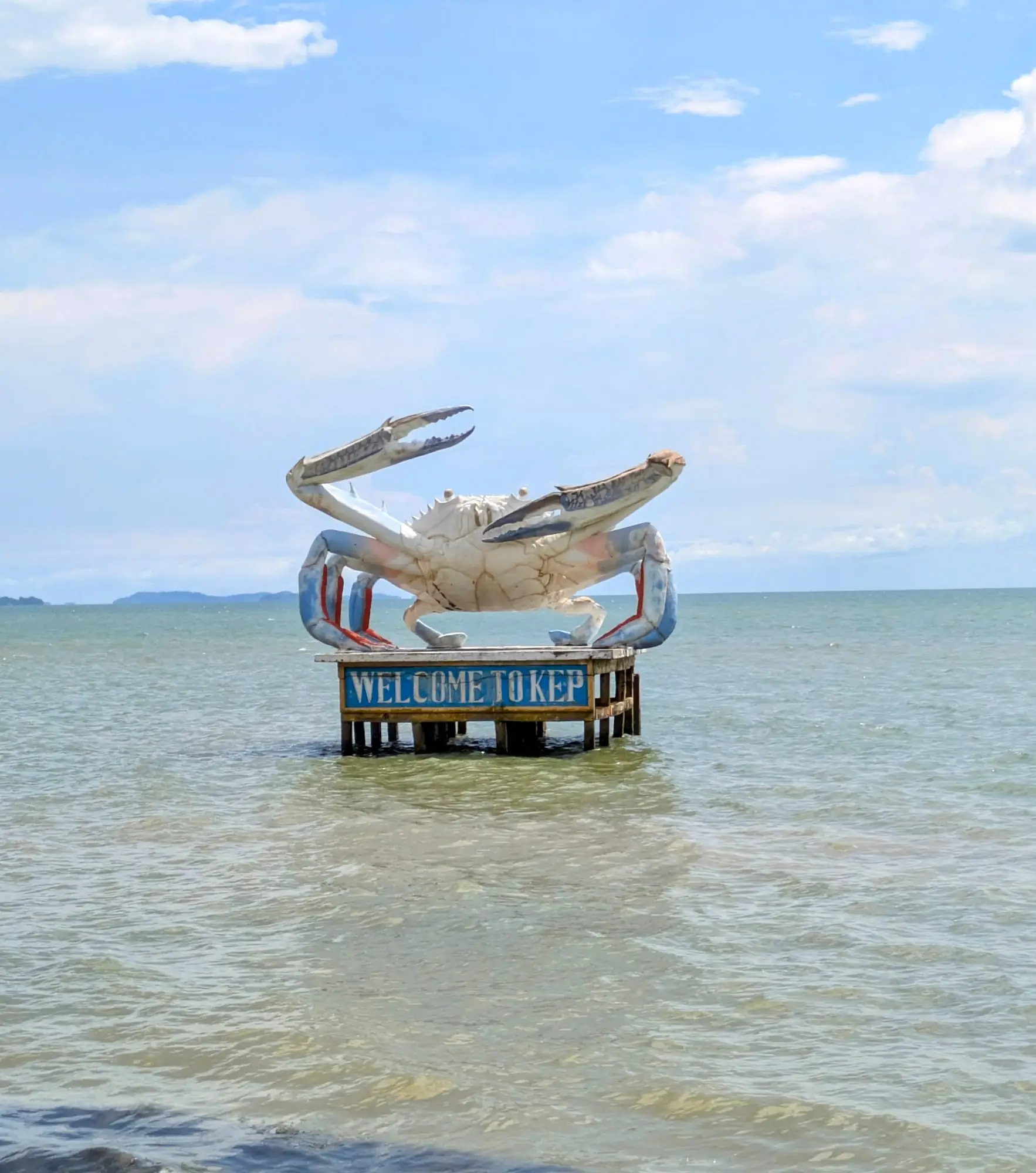
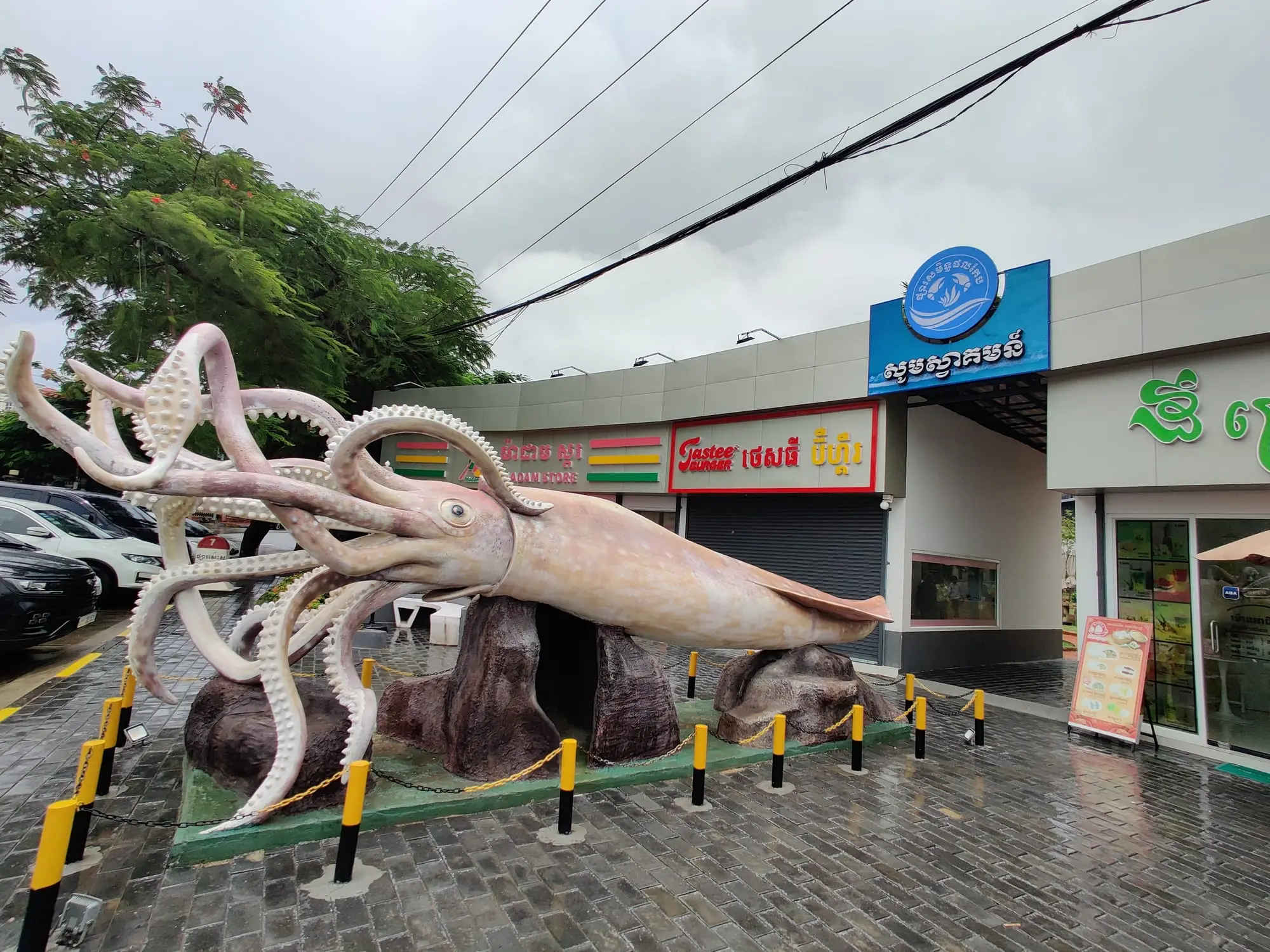
As Kep recovered, the town raised a giant crab statue — locally known as the 'Crab King' — at the entrance to the seafood market. It quickly became the symbol of Kep's identity and its crab trade.

Today

A calm eco-tourism stop

Peaceful and green, Kep is now known for slow travel, the national park, the islands, and above all its crab market — the place most visitors remember.

This historical overview is compiled from public sources and may differ in detail. Verify locally before you travel.

Culture, Cuisine & Local Life

The market is more than a place to buy seafood — it is the living centre of Kep's coastal culture.

🦀

Kep pepper crab

The signature dish: local crab stir-fried with Kampot pepper. Kampot pepper is a protected Geographical Indication of Cambodia, and the pairing is one of the country's best-known coastal flavours.

🎣

A fishing community

Generations of local fishers work the inshore waters in small boats, landing crab and seafood at first light. The market reflects a working, close-to-the-sea way of life.

🌾

From sea to table

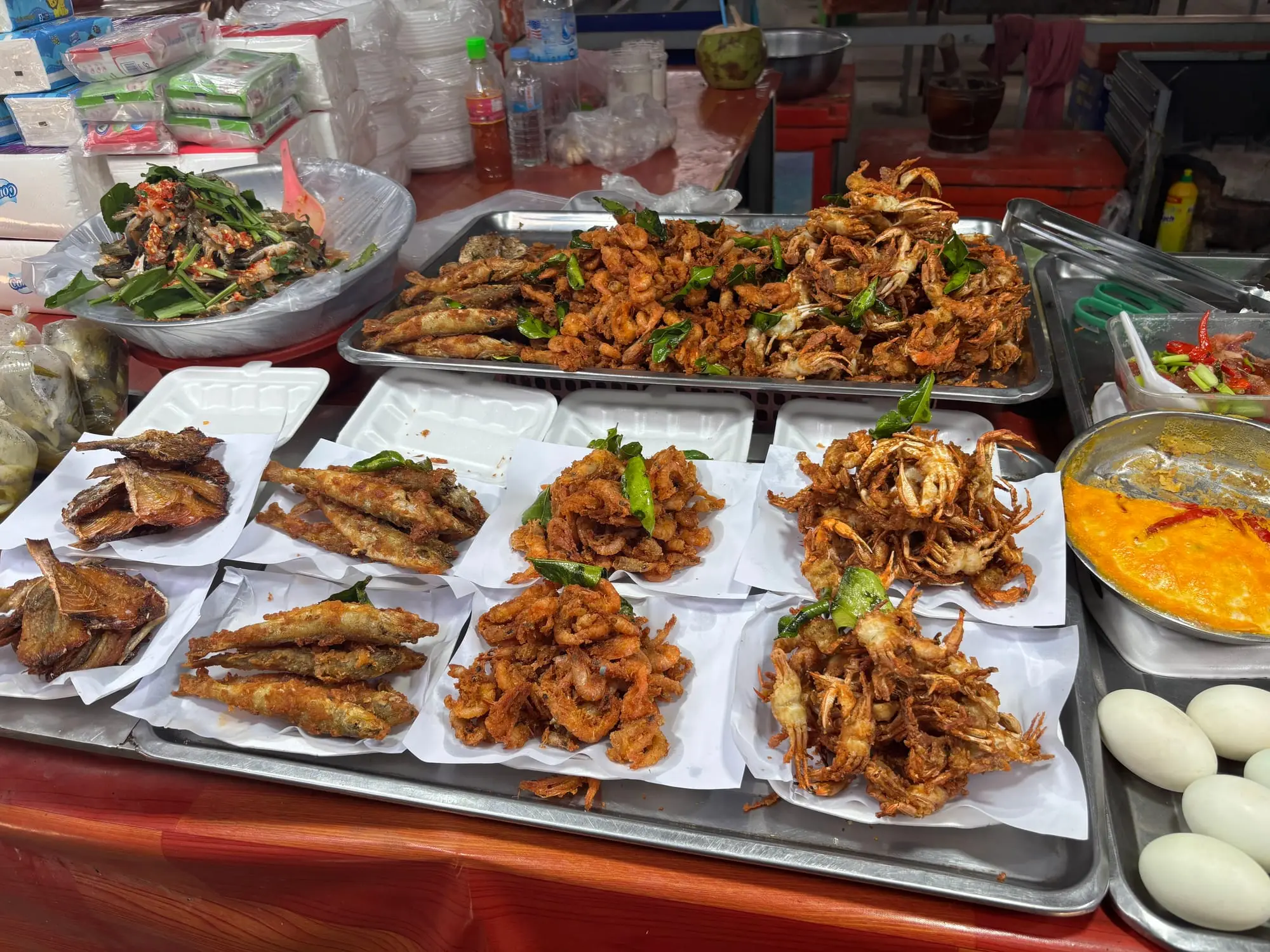
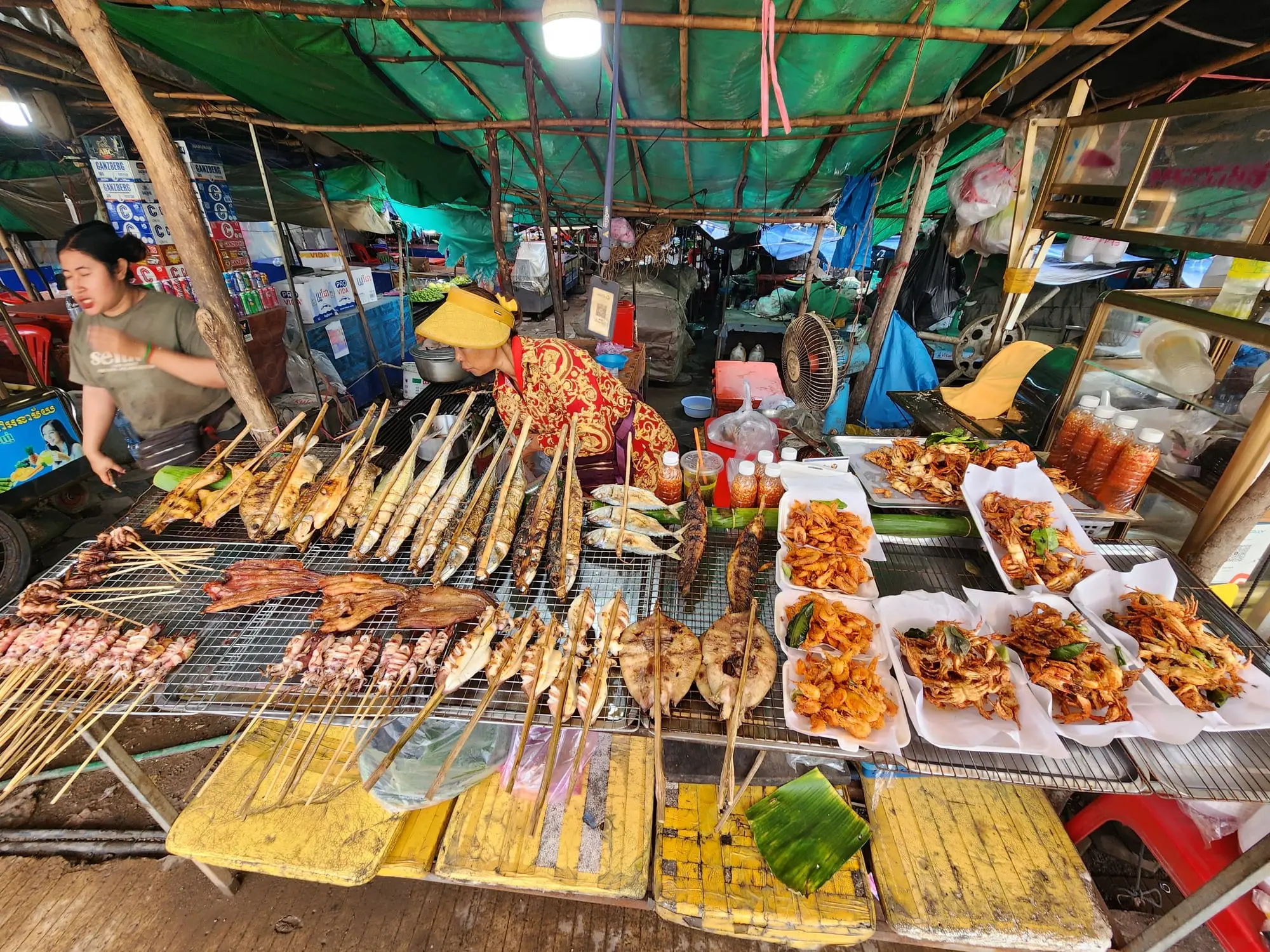
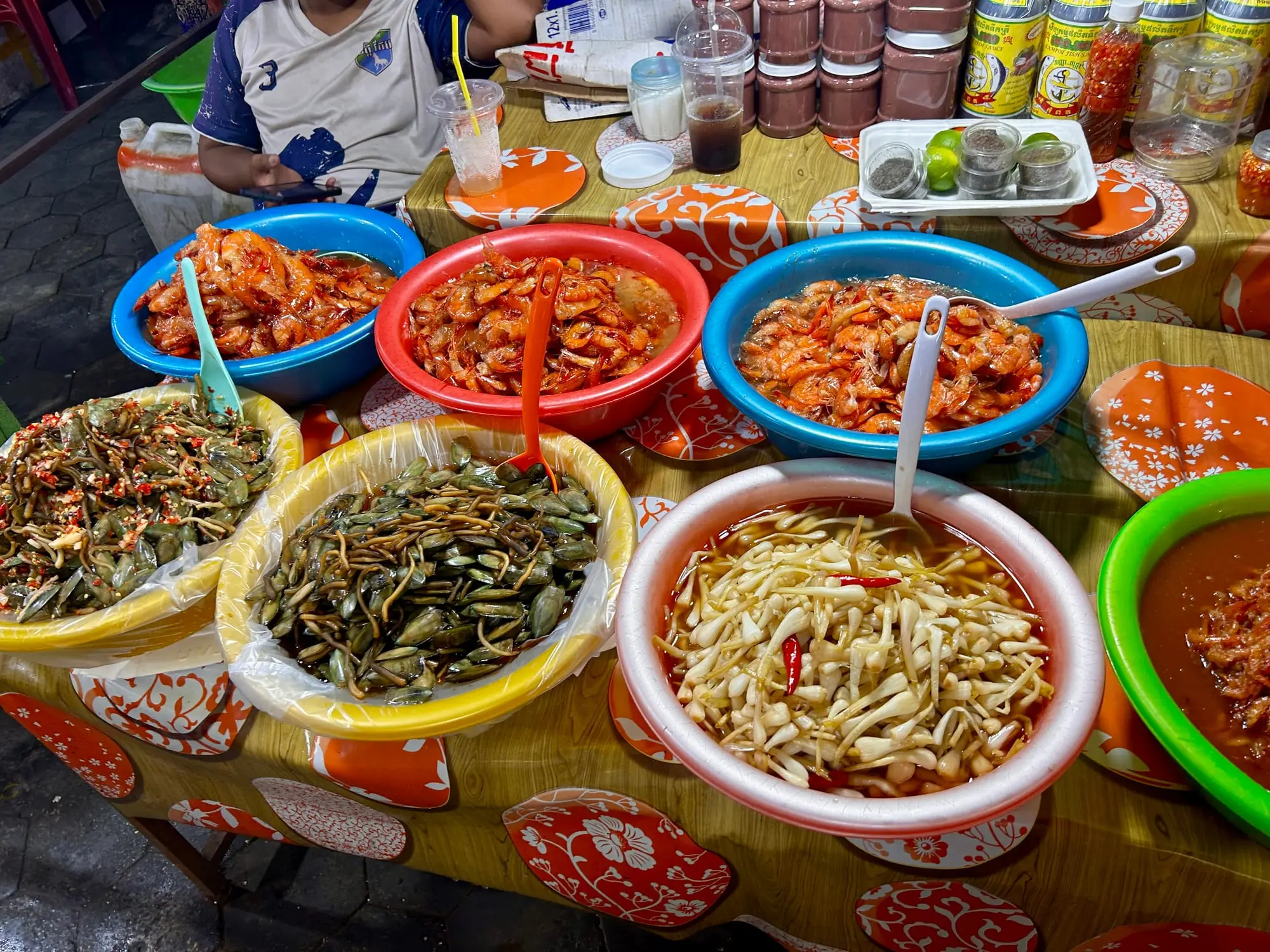
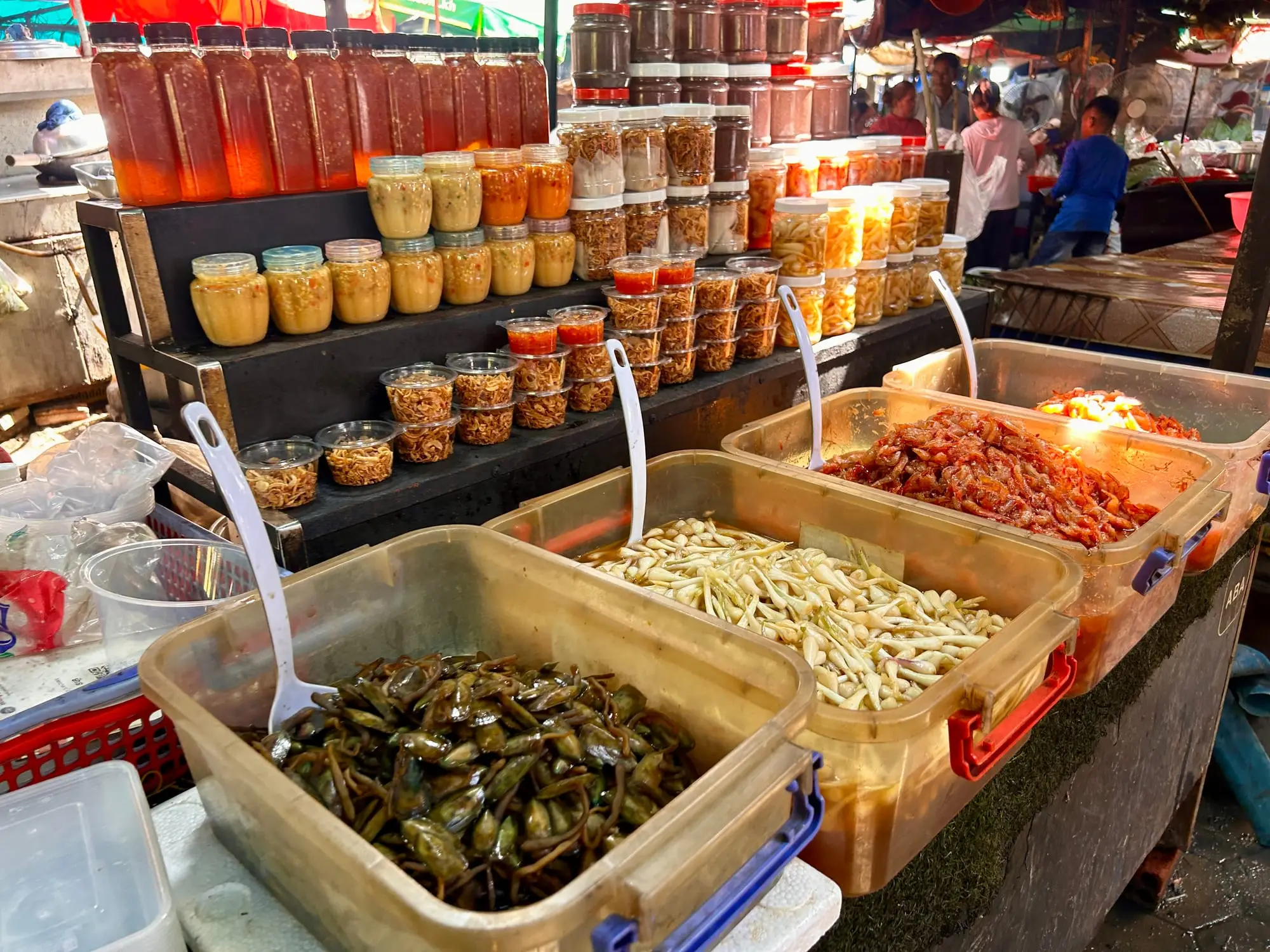
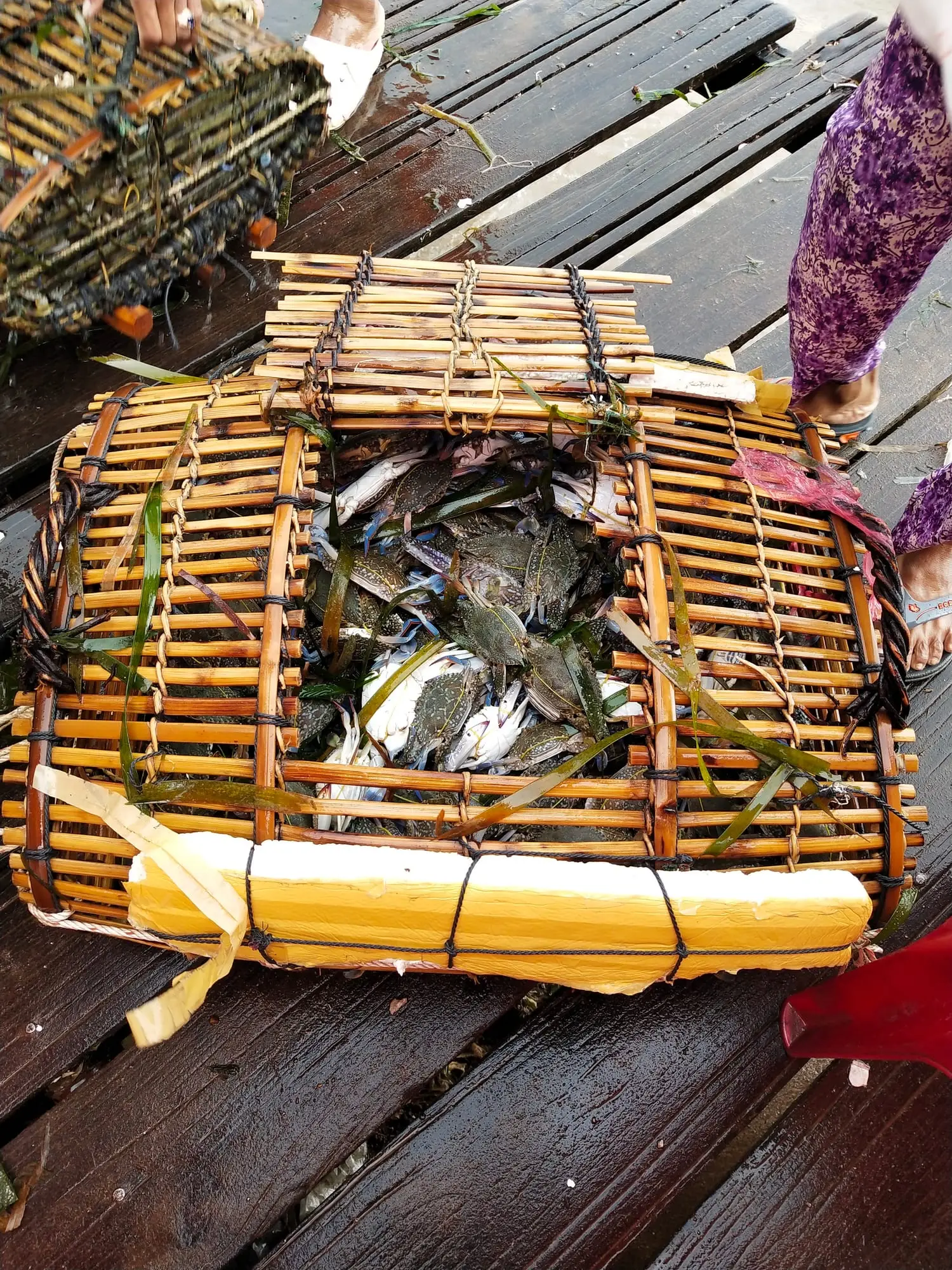
Visitors can buy live crab and have it cooked nearby, or simply watch the catch move from boat to stall — an open window on the local food chain.

🪸

Coastal ecology

Kep sits on the Gulf of Thailand. Its waters support mud crab and blue swimmer crab, and the nearby mangroves and reefs are part of a fragile marine environment worth protecting.

🦀

The 'Crab King' and its meaning

The giant red crab statue that guards the market is often called the 'Crab King' by locals and visitors alike.

More than a photo spot, it is a civic symbol: the crab represents the sea's generosity and the town's recovery after difficult years. For many in Kep, the statue marks the moment the town chose to rebuild its identity around the ocean that feeds it.

Stories told by local vendors mix fact and fondness — some say the crab brings good luck to the fishing families, others simply smile and call it 'the king of Kep'. Whether legend or local pride, it captures the spirit of the place.

Nearby Attractions

Kep is compact, so the crab market pairs naturally with a few other coastal stops within a short ride.

🌳

Kep National Park

A green hill park above the bay with a viewpoint, a coastal forest trail, and the old 'Sunset Road'. A short drive from the market.

≈ 10 min drive
🏝️

Rabbit Island (Koh Tonsay)

A quiet island with sandy beaches, reached by a short boat trip from the islands pier. Popular for a half-day swim and relax.

Boat from Kep pier
🌶️

Kampot pepper farms

In nearby Kampot, family farms grow the protected Kampot pepper that defines Kep's famous crab dish. Tours and tastings are available.

≈ 40 min from Kep
🏖️

Kep Beach

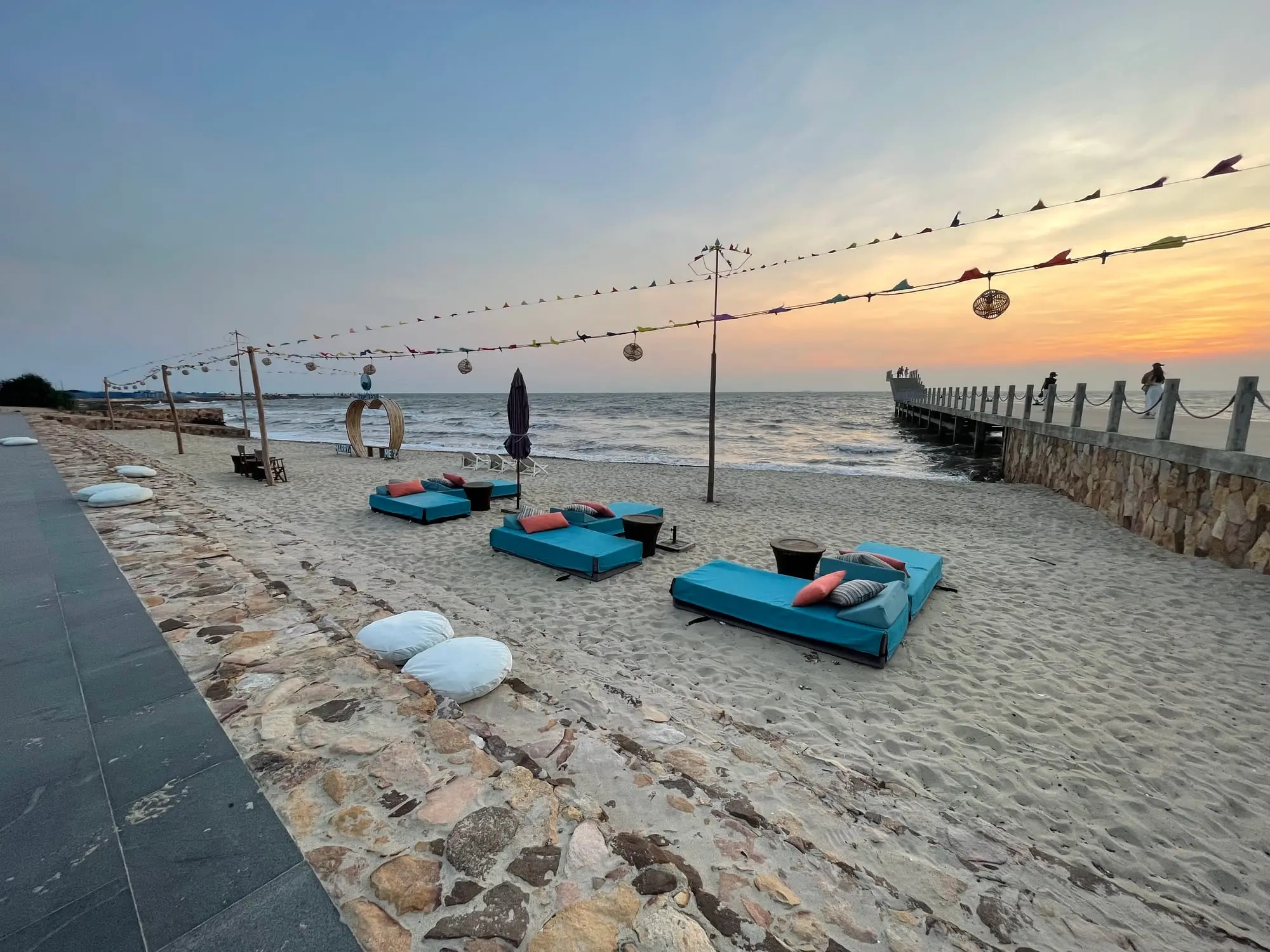
A calm public beach near the old resort area, good for a stroll and sunset. Simple and uncrowded compared with bigger beaches.

≈ 5 min drive

Why Visit

A few things that make Kep Crab Market worth a stop on a Cambodia coast trip.

🦀

Fresh crab

Crab landed the same morning, sold live by weight — the reason most people come.

🌅

Morning atmosphere

Arrive at dawn to see the catch arrive, the stalls set up, and the town wake up.

🍳

Cook-it-yourself

Buy live crab and have a nearby eatery cook it, often with Kampot pepper.

📸

The Crab King

The giant crab monument at the entrance is Kep's most-photographed landmark.

Best Time to Visit

Kep is warm year-round, but the experience changes with the seasons.

☀️

Dry season (Nov–Apr)

Cooler, sunny days and calm seas — the most comfortable time to walk the market and coast. Expect more visitors from December to February.

🌧️

Green season (May–Oct)

Fewer crowds and lush scenery, but afternoon showers and rougher water. Mornings are usually clear.

🦀

Crab availability

Crab is sold year-round, but many locals say the meat is fullest around the drier months.

A Simple Visit Plan

How long to stay

Most visitors spend 1–2 hours at the market, often combined with a morning in Kep National Park or an afternoon on the islands. Kep works well as a half-day stop between Kampot and the coast.

Morning at the market

  1. 1 Arrive around 07:00–08:00 to see the catch land and stalls set up.
  2. 2 Walk the shore and compare what is on ice that day.
  3. 3 Buy crab and have it cooked nearby with Kampot pepper.
  4. 4 Photo the 'Crab King' monument before the heat builds.

Half-day Kep loop

  1. 1 Start at the crab market for breakfast and photos.
  2. 2 Drive up Kep National Park for the viewpoint and forest trail.
  3. 3 Head to the islands pier for a boat to Koh Tonsay (Rabbit Island).
  4. 4 Return for sunset along the seafront promenade.

Getting There

Kep is small and easy to reach. The market is on the waterfront of Kep town.

🚐

From Phnom Penh

Around 170 km. Buses and shared taxis run to Kep; a private taxi is faster and more flexible.

  1. 1 Take a bus or shared taxi from Phnom Penh to Kep (≈3–4 hours).
  2. 2 From Kep town, a tuk-tuk or moto reaches the market in minutes.
🚐

From Kampot

About 25 km. Tuk-tuks, taxis, and moto rentals connect Kampot with Kep town and the market.

  1. 1 Hop on a tuk-tuk or taxi from Kampot to Kep (≈40 minutes).
  2. 2 Ask to be dropped at the crab market waterfront.
🛵

Around Kep

Tuk-tuks and rented motos are the easiest way to move between the market, national park, and islands pier.

  1. 1 Rent a moto or hire a tuk-tuk for half a day.
  2. 2 Link the market with the national park and the islands pier.

Nearby Public Facilities

Kep Crab Market is a compact public market by the sea. The following practical services are available in and around Kep town. As an independent, non-profit guide we do not recommend or rank any specific business — we only describe the types of services you may find.

🚻

Restrooms

Public restrooms are generally available near the market and along the seafront promenade. Conditions vary; visitors should carry tissue and small change where needed.

Accessibility

The market is mostly open ground but can be uneven, with steps and narrow lanes. Visitors with reduced mobility should visit off-peak and wear sturdy footwear.

🚗

Parking

Motorbike and car parking can be found near the market entrance and along the road. Spaces fill up on weekends and public holidays.

🍜

Dining

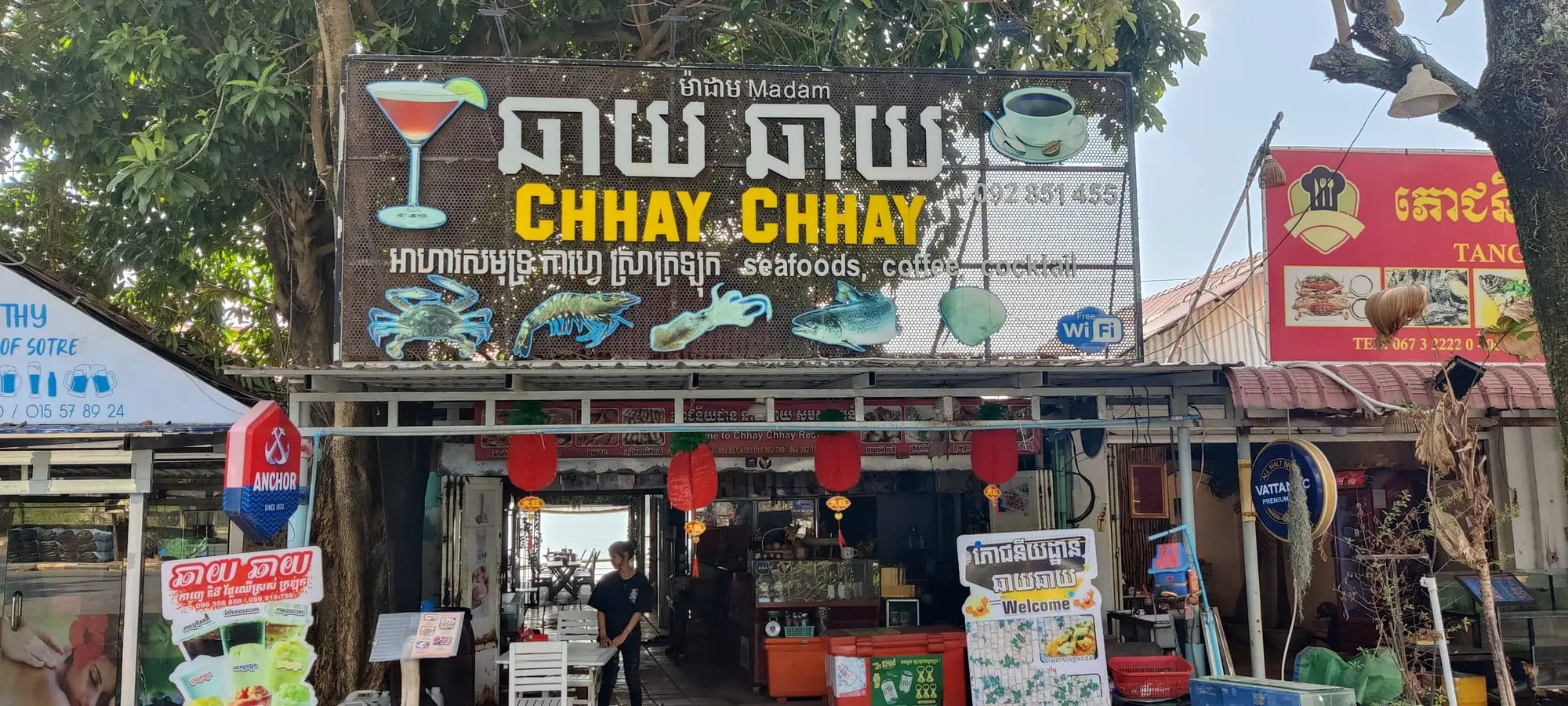
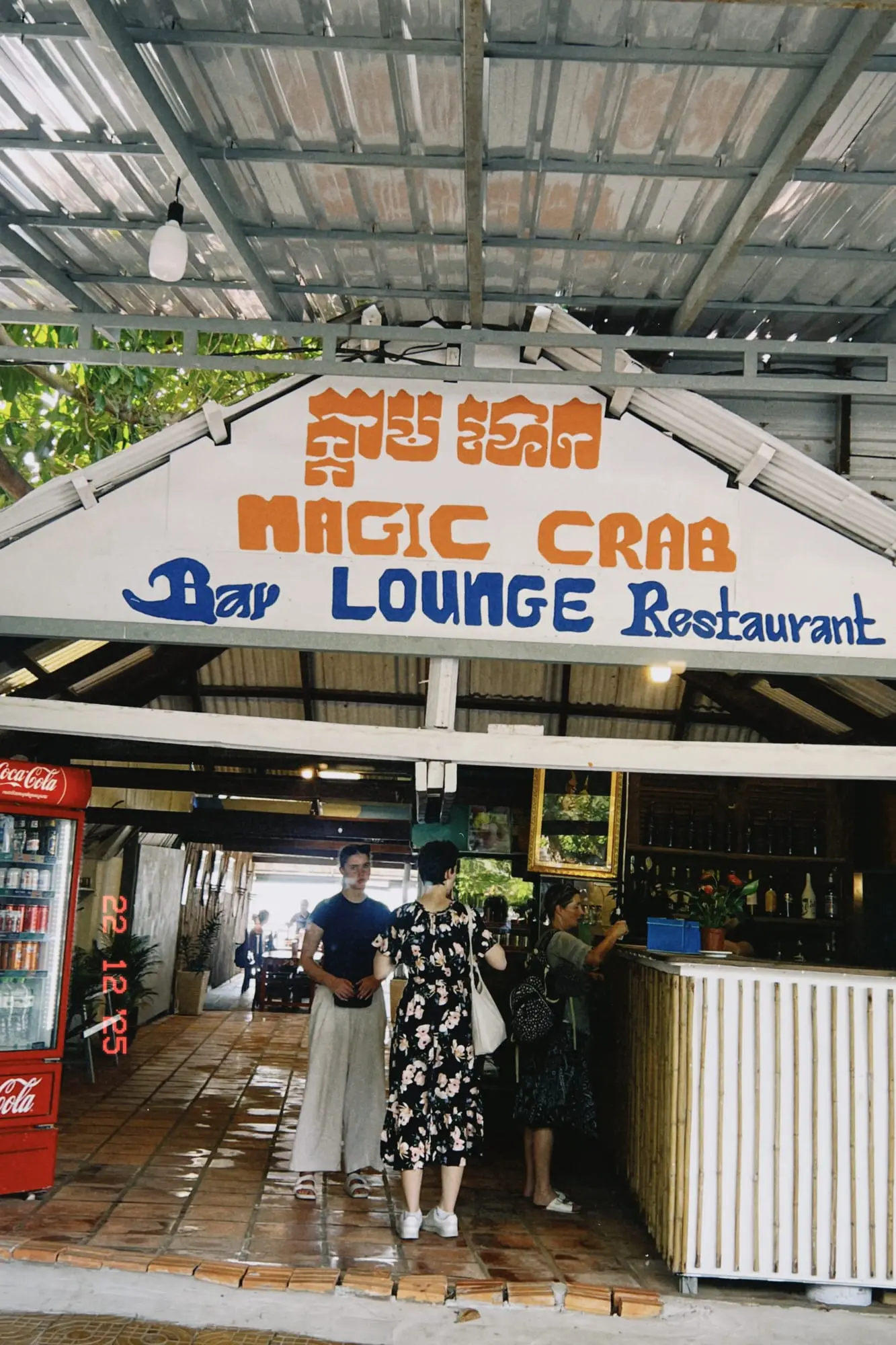
The area offers seafood restaurants, food stalls, and drinks. This site does not recommend specific venues; prices and quality vary, so compare before ordering.

🏨

Accommodation

Kep provides seaside resorts, town guesthouses, homestays, and boutique stays. No ranking is given; choose by budget and location.

🛒

Supermarkets & groceries

For self-catering, small supermarkets and grocery shops in Kep town sell drinks, snacks, and daily necessities. This site names no specific store.

🏪

Convenience & daily stores

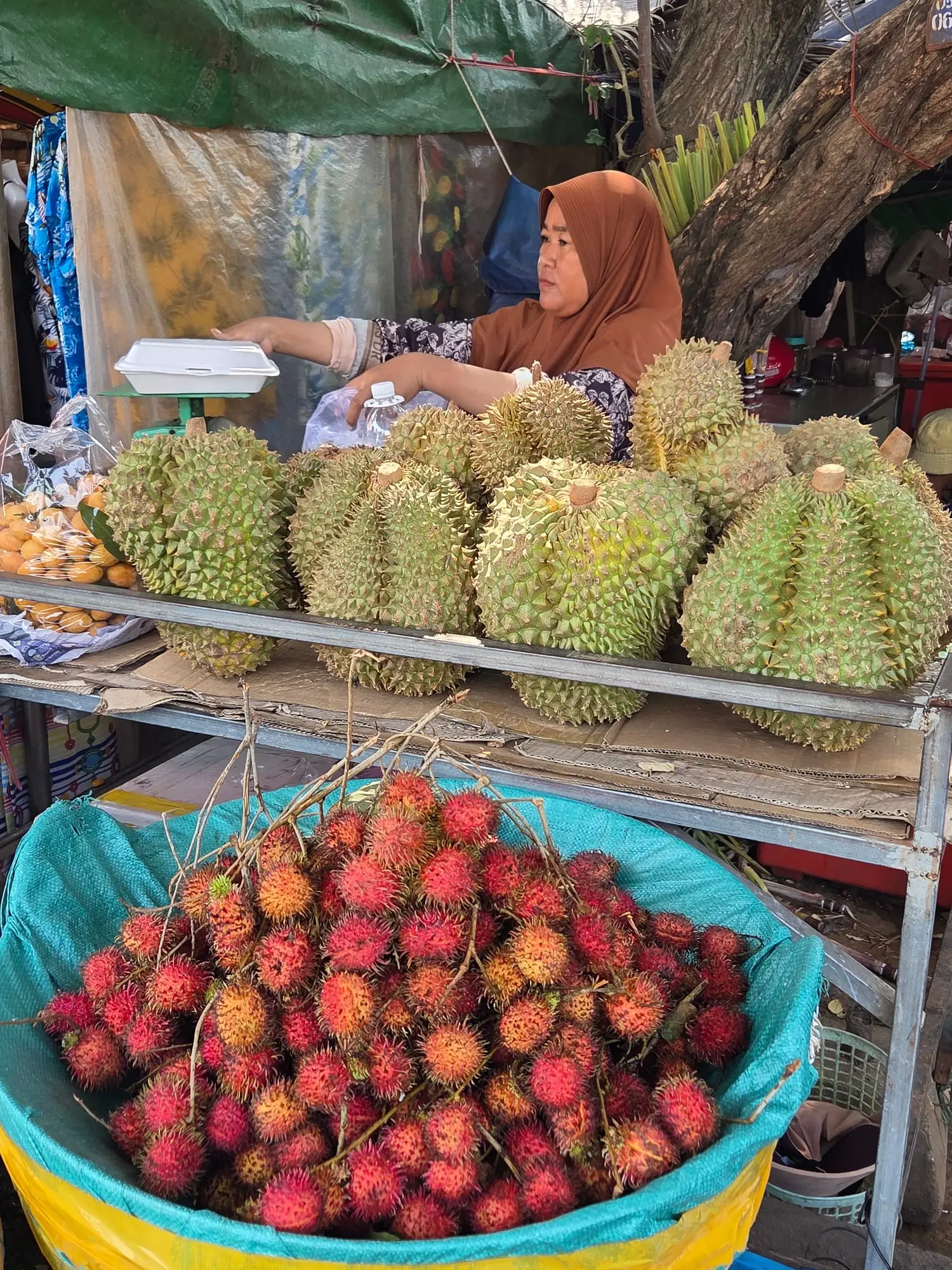
Near the market and main road you can find convenience shops, fruit stalls, and travel-supply vendors for short needs.

Fuel & EV charging

Within Kep town, traditional fuel stations serve cars and motorbikes. EV charging is limited — confirm locations and connectors in advance.

🏧

ATM & banking

ATMs and banks are available in Kep town for cash withdrawal; carry enough cash as the market area is mostly cash-based.

💊

Pharmacy & medical

Basic pharmacies and a health centre can be found in town for minor needs. For serious issues, plan onward travel to Kampot or Phnom Penh.

Weather & Climate

Kep has a tropical climate with a clear wet and dry season.

🌡️

Temperature

Daytime highs usually sit around 28–32°C year-round; evenings are a little cooler near the coast.

🌧️

Rainy season

From May to October, showers are common, often in the afternoon. Mornings are usually clear.

☀️

Dry season

From November to April, days are sunny and seas are calm — the most comfortable time to visit.

👕

What to wear

Light, breathable clothing, a hat, and sunscreen. A light rain layer helps in the green season.

Visitor Tips

Go early

Arrive in the morning for the freshest catch, cooler temperatures, and fewer crowds.

Footwear

The market is practical and can be wet or slippery — sandals or sturdy shoes are best.

Cash

Bring small bills; the market runs largely on cash, and cards are rarely accepted.

Photos

Ask before photographing vendors or their catch — a little courtesy goes a long way.

Location & Map

Kep Crab Market on the waterfront of Kep town, Kep Province.

📌 10.4888976, 104.2862596

🗺️ Open in Google Maps

Frequently Asked Questions

Where is Kep Crab Market?

It sits on the waterfront of Kep town, Kep Province, Cambodia — on the Gulf of Thailand coast. The exact location is marked on the map below and in the page footer.

What are the opening hours?

The market operates roughly from 05:00 to 17:30. The liveliest time is early morning, when the overnight catch is sold; by mid-afternoon stalls begin to wind down.

Is there an entrance fee?

No. The market is a public space and free to enter. You pay only for what you buy.

Is the market suitable for families?

Yes. It is an open, flat public area. Keep an eye on little ones near the water and boats, and visit early to avoid heat and crowds.

Can I buy fresh crab to cook myself?

Yes. Live crab is sold by weight; many nearby eateries will cook your purchase for a small fee. As a neutral guide we do not name specific vendors.

How do I get to Kep Crab Market?

Kep is about 25 km from Kampot and 170 km from Phnom Penh. Tuk-tuks, taxis, and rented motos connect the market with Kep town and the national park.

Do vendors accept cards?

Mostly cash. Some larger eateries may take mobile payments, but the market itself is largely cash-based — bring small bills.

What kind of crab is Kep famous for?

Kep is best known for crab cooked with Kampot pepper. The crabs are mainly mud crab and blue swimmer crab landed by local inshore fishers.

When is the best season for crab?

Crabs are available year-round, but many locals say the meat is fullest around the drier months (roughly November–May). The market is busiest in the cool, dry season.

Is the giant crab statue worth a visit?

Yes — the 'Crab King' at the market entrance is Kep's most photographed landmark and a good orientation point. It is free to view.

Is Kep Crab Market suitable for children and seniors?

Yes. It is an open, flat public area. Keep an eye on little ones near the water and boats, and visit early to avoid heat and crowds.

Can I take photos?

Generally yes, but ask before photographing vendors or their catches out of respect.